By Isaac Aregbesola
The Chairman of Independent Corrupt Practices and Other Related Offences Commission (ICPC), Dr Musa Aliyu, says fighting corruption needs collective action and strong partnerships across all sectors.
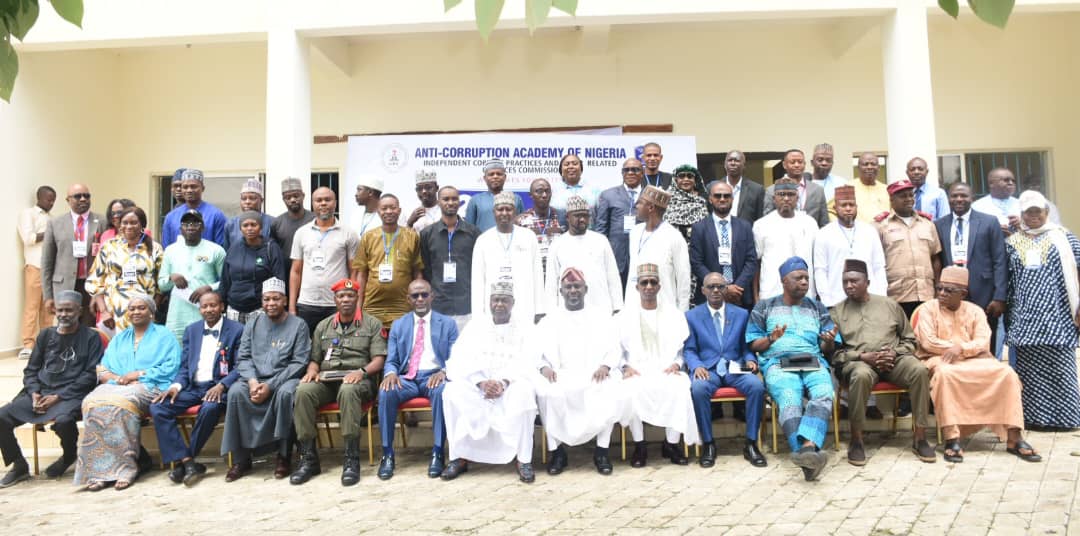
Aliyu stated this on Wednesday at the opening of a three-day International Conference on Anti-Corruption, Transparency and Integrity in Governance at the Anti-Corruption Academy of Nigeria (ACAN) in Keffi, Nasarawa.
The News Agency of Nigeria (NAN) reports that the conference is themed: “Strengthening Integrity Systems for Sustainable Development and Public Trust in Nigeria.”
The ICPC boss, represented by the commission’s Director Special Duties, Hassan Mohamed, maintained that the corruption crisis in the country could not be solved by anti-graft agencies alone.
He told the participants, including investigators, academics, legal practitioners and professionals from diverse fields, that the fight against corruption must move beyond law enforcement to a shared national responsibility.
“It is an acknowledged fact that lack of integrity and failure in ethical compliance sit at the centre of most of the challenges facing the country today.
“It must also be understood that the fight against corruption cannot be won by anti-graft agencies alone.
”It requires collective action and strong partnerships among public institutions, the private sector, civil society organisations, professional bodies, faith-based organisations, the media, the academia and citizens,” he stated.
Aliyu, a Senior Advocate of Nigeria (SAN), said that the theme of the conferenec was timely, as “Nigeria grapples with systemic corruption that continues to undermine development and democratic governance.”
He linked the conference objectives directly to President Bola Tinubu’s Renewed Hope Agenda, noting that discussions on anti-corruption strategies, best practices and evidence-based approaches aligned with the administration’s governance priorities.
The ICPC boss outlined five strategic goals for the conference to include: promoting scholarly and policy discussions on anti-corruption strategies; facilitating exchange of experiences among stakeholders and generating innovative approaches to combating graft.
Others, he said, were strengthening partnerships across government, academia, civil society and business, and advancing practical recommendations for transparency and accountability.
Aliyu called on participants to move beyond rhetoric, engage in robust discussions and produce actionable recommendations that would strengthen institutional integrity in Nigeria and beyond.
He expressed confidence that collaboration and innovation would deepen public trust and build a more accountable country.
“It is my believe that together, through collaboration, innovation, and unwavering commitment, we can strengthen integrity systems, deepen public trust, and build a more transparent, accountable, and prosperous Nigeria.”
The ICPC chairman also commended ACAN for its “relentless commitment” to entrenching good governance through research and training, describing the academy’s role as vital to building long-term capacity for integrity in public service.
Gov. Abdullahi Sule of Nasarawa State, who declared the conference open, lauded ICPC for its unrelenting efforts at combating corruption in the country.
Sule, represented by the Commissioner for Security and other Sundry Matters, Baba Usman, pledged his support to the anti-graft agency in tackling the menace in the country.
The Provost of ACAN, Prof. Ghali Ibrahim, in his address of welcome, called for stronger integrity systems and greater transparency in governance.
Ibrahim described corruption as a major driver of under-development, insecurity, poverty and declining public trust in Nigeria.
The provost said that the theme was carefully selected to address the pressing governance and development challenges facing Nigeria and other African countries.
According to him, lack of transparency and integrity in governance has contributed significantly to the continent’s developmental setbacks.
He said that the gathering was intended to generate intellectual engagement, policy recommendations and innovative solutions to the barriers hindering transparency and integrity in public institutions.
A former Chairman of Economic and Financial Crimes Commission (EFCC), Abdulrasheed Bawa, in his own remarks, said that corruption fight was beyond rhetoric and must be fought with determination and discipline.
He said that the battle against corruption could be won only when the system was fixed and everyone rose against the menace.
